The Rainbow
The rainbow is perhaps the most universally recognized symbol of the queer community. Whether in an arc, a ribbon, or a flag, the rainbow serves as signifier of queerness worldwide. Conversely, the rainbow has been banned for its association to the community where sexuality or gender differences are still considered criminal. While the history of the pride flag itself is discussed further on in this walk, it is one of the main reasons why the rainbow is so strongly linked to the community. In smaller part, the rainbow references Somewhere Over The Rainbow, sung by Judy Garland, who many consider the first queer icon.
Goose
This goose represents the poem “Wild Geese” by poet Mary Oliver. Oliver was a lesbian and though she seldom spoke publicly on her sexuality, her work (particularly Wild Geese) speaks to the queer experience. Her poems are full of the beauty of the natural world. Winner of a Pulitzer Prize and a National Book Award, in 2007 Oliver was declared best selling poet in the United States by the New York Times. Though perhaps unknown to Oliver, Canada and Greylag geese have been observed to mate for life with the same sex. Here is the poem “Wild Geese” in its entirety:
You do not have to be good.
You do not have to walk on your knees
for a hundred miles through the desert repenting.
You only have to let the soft animal of your body love what it loves.
Tell me about despair, yours, and I will tell you mine.
Meanwhile the world goes on.
Meanwhile the sun and the clear pebbles of the rain
are moving across the landscapes,
over the prairies and the deep trees,
the mountains and the rivers.
Meanwhile the wild geese, high in the clean blue air,
are heading home again.
Whoever you are, no matter how lonely,
the world offers itself to your imagination,
calls to you like the wild geese, harsh and exciting -
over and over announcing your place
in the family of things.
The Ladder
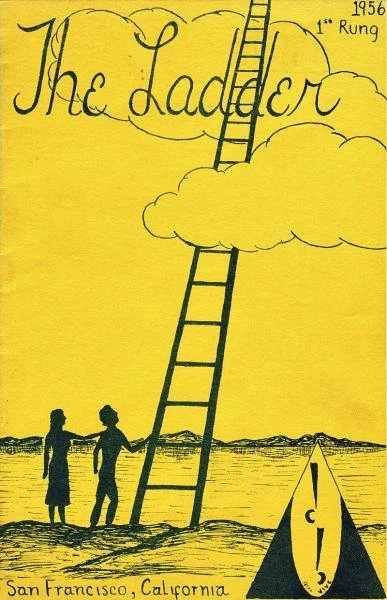
The Ladder was the first ever lesbian publication nationally distributed. It began circulating in 1957 and went on to be printed monthly until 1972. The cover image of the first few issues, and indeed the namesake of the magazine, was a ladder to the clouds. The imagery of a ladder itself is a reference to climbing out of the “well of loneliness.” The Well of Loneliness is a seminal work by poet Radclyffe Hall and at the time, something many lesbians would be familiar with.
Lavender
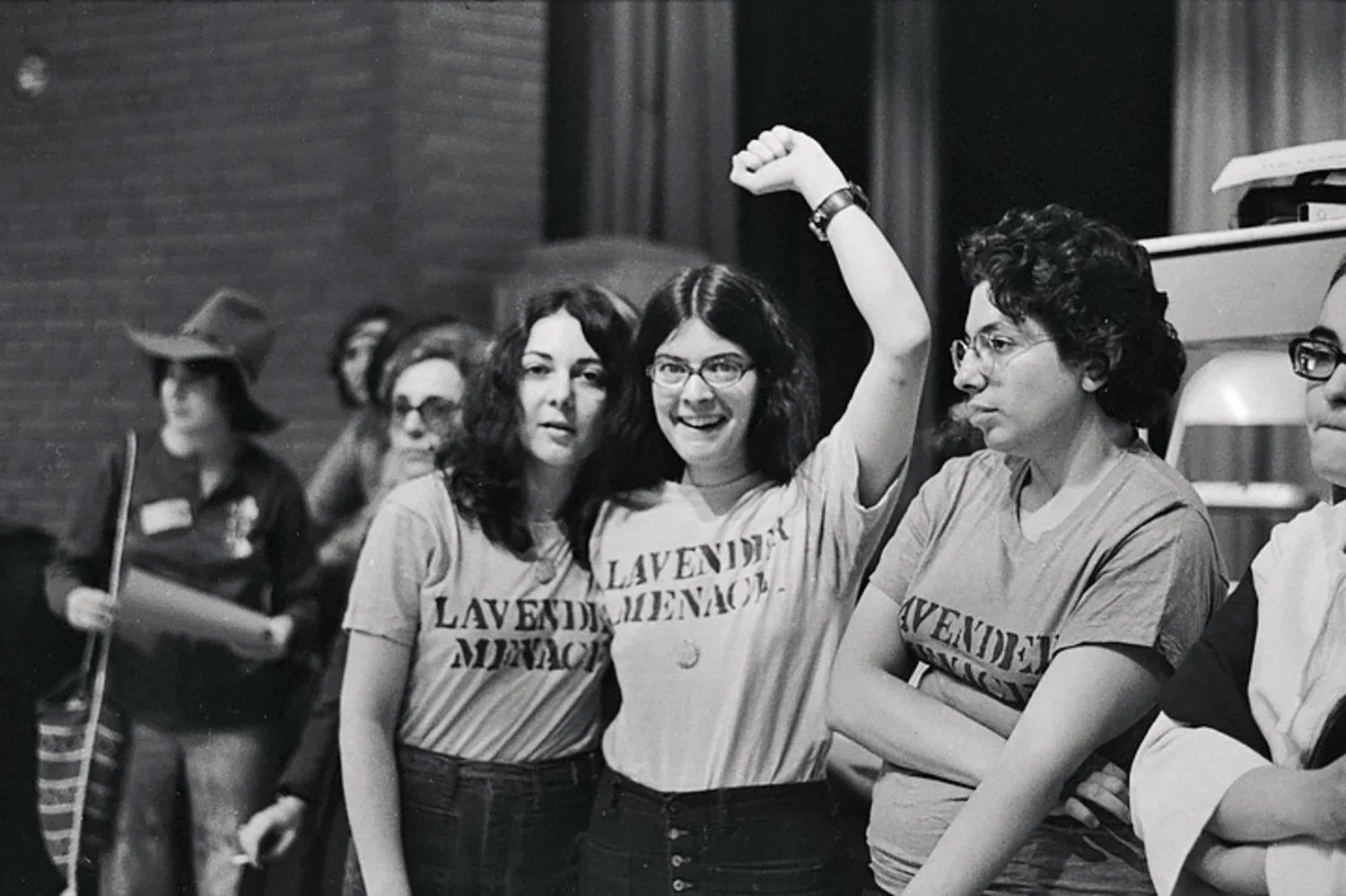
The color lavender (and in turn the plant) has a rich history of association with the community. After exclusions during the fight for women’s rights, lesbians labeled themselves the lavender menace. Gay men and women would enter into “lavender” marriages to conceal their identities, and lavender as a color has long represented the community. The origin of lavender as a color representing queerness is a derogatory description for an effeminate man from the 1800s - he was said to have a “streak of lavender.” Over time, like many once derogatory phrases or symbols, lavender was reclaimed. It can now be found on countless buttons, shirts, posters, and symbols throughout queer history.
To read more about the Lavender Menace in particular, click here.
The Equals Sign
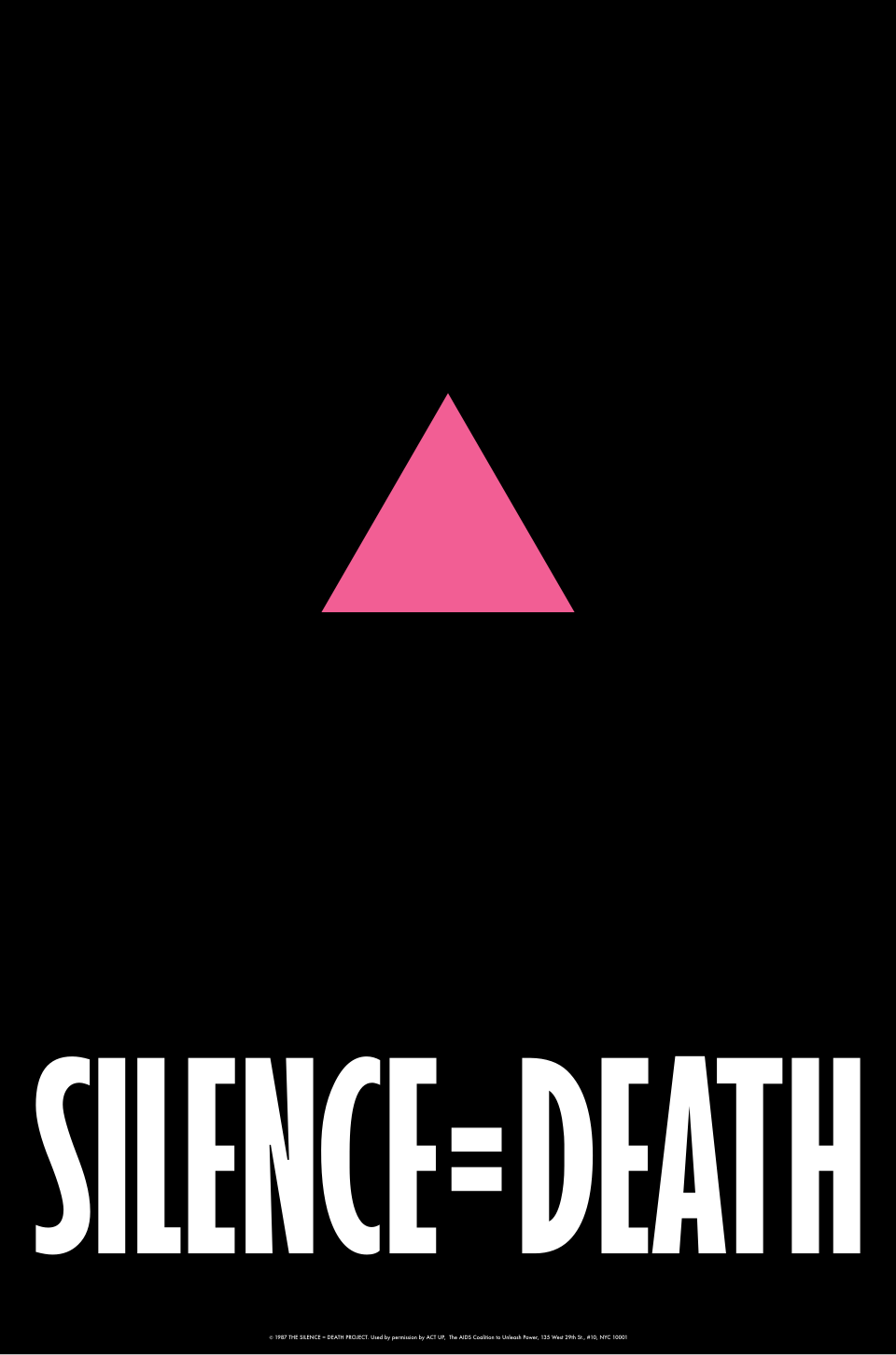
The “equals” symbol is in some ways simple - it represents the desire for equality. The queer community, despite how far we have come legally and socially, is still fighting for equality worldwide and in the United States. The equals sign is also in reference to the Human Rights Campaign specifically, whose logo is an equal symbol in a square, stylized in yellow and blue. The HRC was founded in 1980 as a political action committee and has historically campaigned for LGBTQ+ rights. Lastly, the equals sign was prominent in the campaign ACT UP, which featured the slogan “SLIENCE = DEATH.” More about ACT UP appears in the explanation of the triangle.
Pansies and Flowers
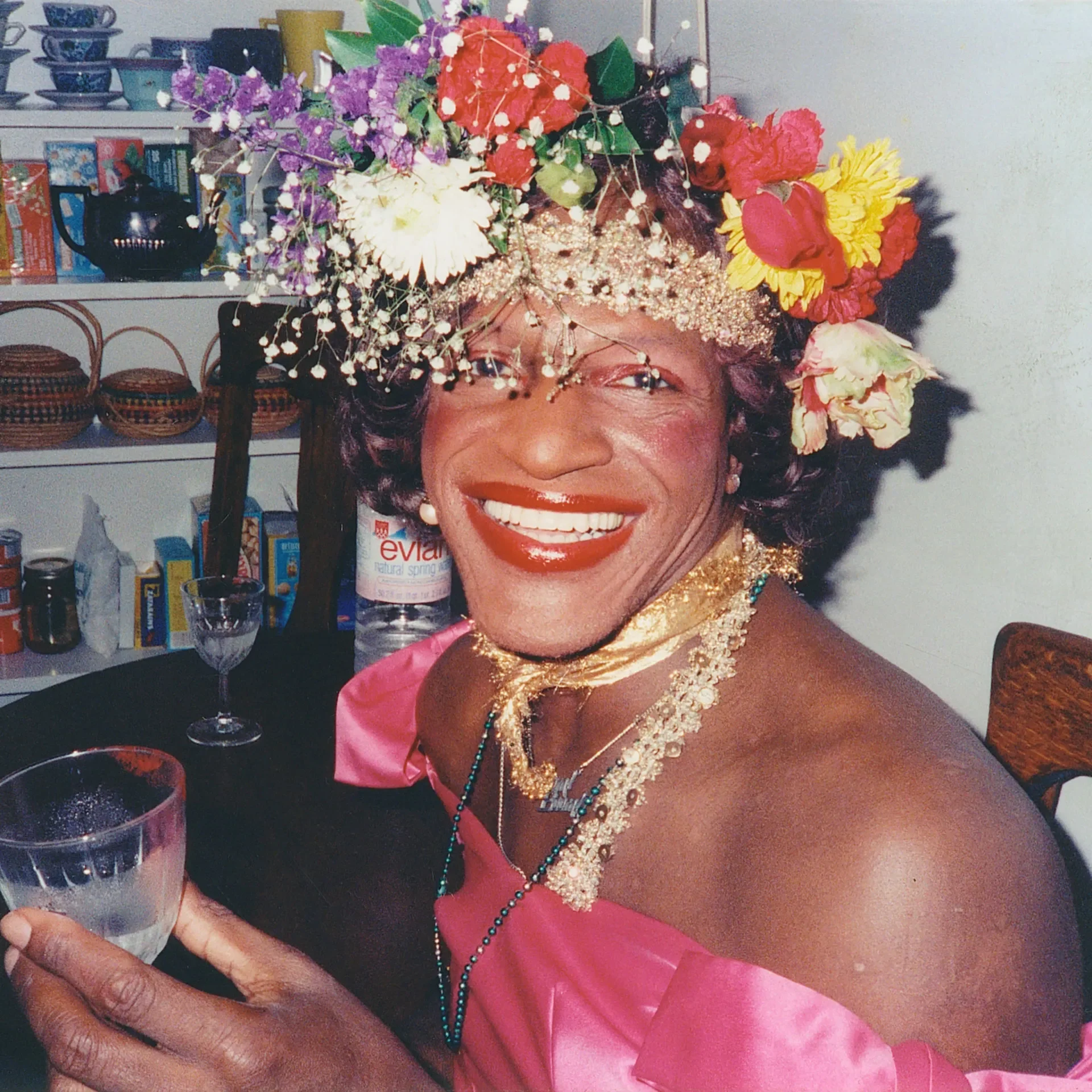
Many types of flowers have specific meanings, and similar to lavender, pansy was once used as a derogatory term for gay men. Marsha P. Johnson is also represented on this poster by flowers. In the words of the National Women’s History Museum, “Marsha P. Johnson was one of the most prominent figures of the gay rights movement of the 1960s and 1970s in New York City. Always sporting a smile, Johnson was an important advocate for homeless LGBTQ+ youth, those effected by H.I.V. and AIDS, and gay and transgender rights.” In the most well known image of Marsha, she is wearing a flower crown.
Read more about flowers’ symbolism for the queer community here.
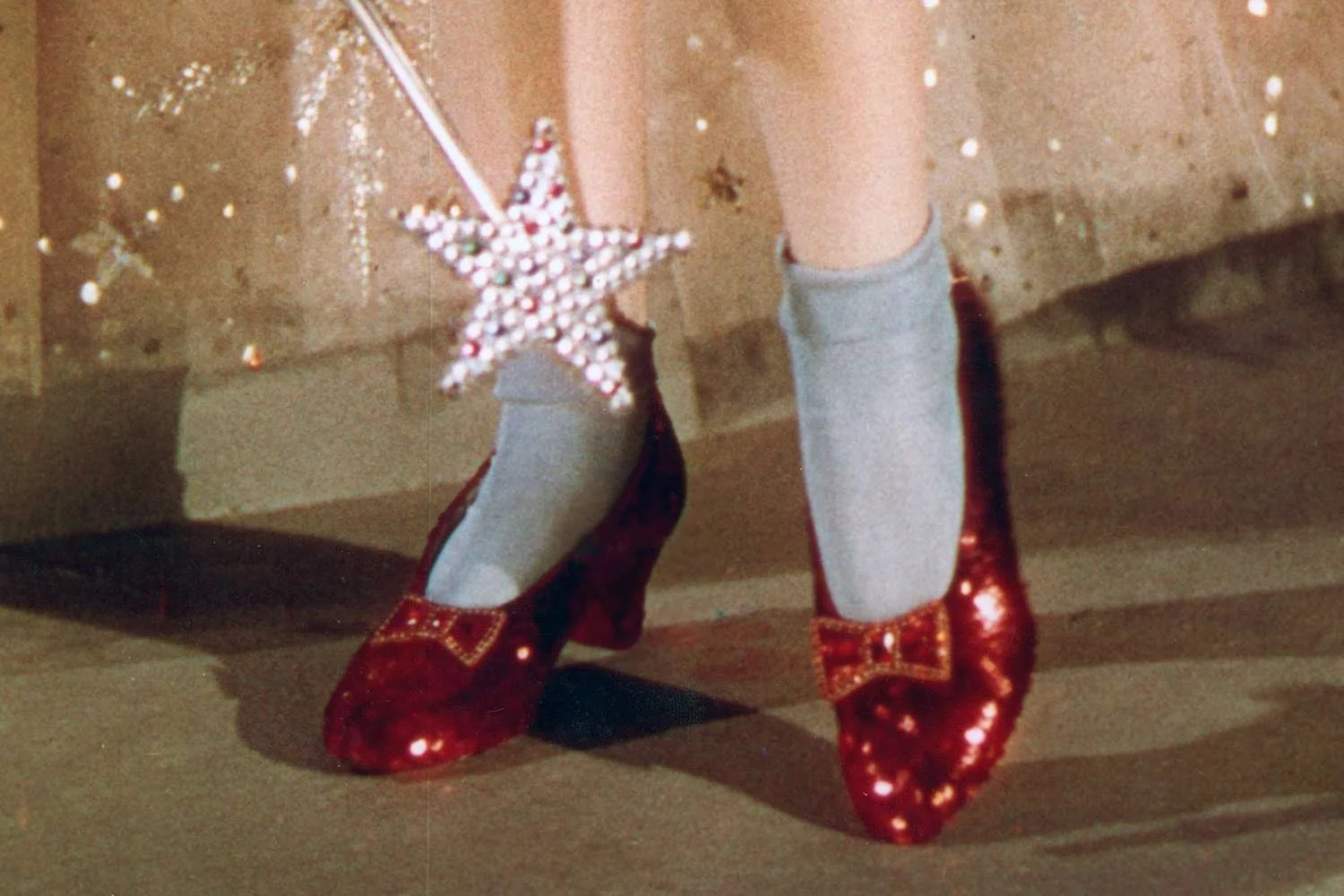
The Ruby Slipper
From “friends of Dorothy” to “Judy” to “goodbye yellow brick road” the Wizard of Oz and Judy Garland are deeply ingrained in queer culture. During World War 2, soldiers would say they were a “friend of Dorothy” as a way to covertly let others know their identity. The phrase was innocuous to those not in the know but to other gay men, it was understood. During a time when being outed could lead to serious consequences, queer people needed to find ways to communicate and find each other. According to the Bay Area Reporter, “Many now see Garland's iconic portrayal of Dorothy Gale in the 1939 classic "Oz" as a queer journey, an escape from the puritanical, morally rigid, black-and-white small-town life to Technicolor city existence with fabulous friends.”
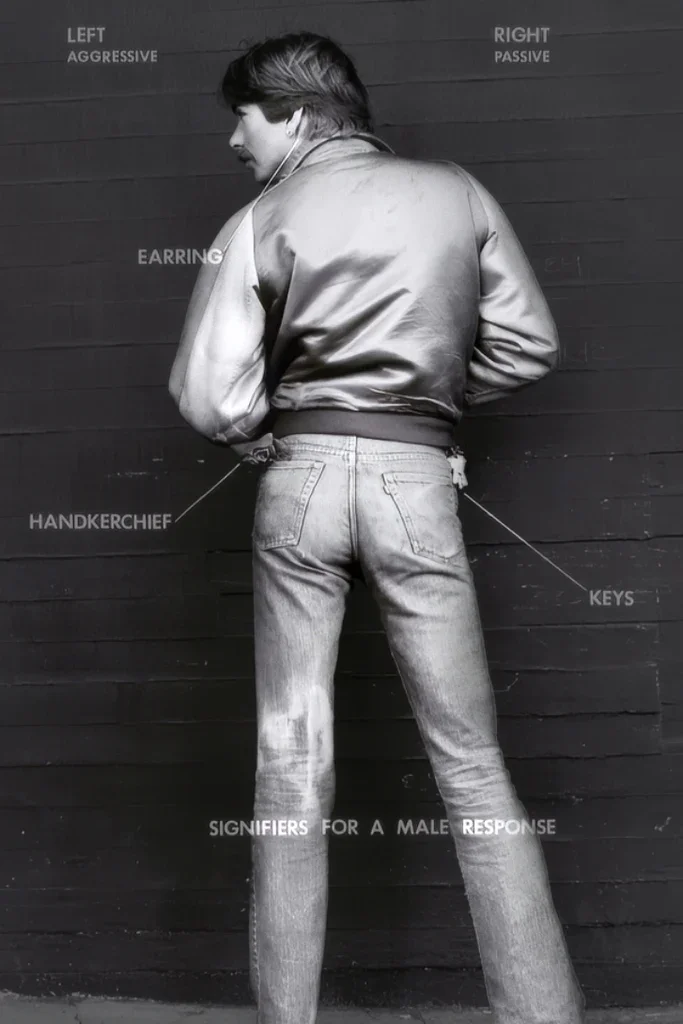
The Hanky, Carabiner, and Earring.
Similar to proclaiming you’re a “friend of Dorothy,” a hanky in a back pocket, a carabiner on a belt loop, or an earring in one ear can covertly signify queerness. The hanky code was a system of flagging for gay men in which different color hankys, bandanas, or pocket squares were used to identify each other. The carabiner served a similar purpose for lesbians. A single earring was also a way to signal ones identity. As opposed to being a vocalized code word like “friend of Dorothy,” these were ways to visually signal one’s identity to those in the know.
Note: further research on the hanky code in particular may contain 18+ subject matter.
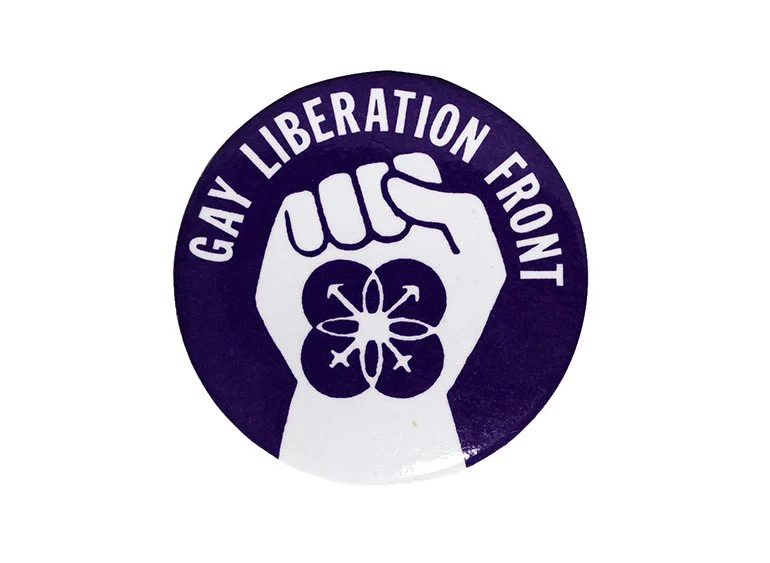
Mars and Venus Symbols
Stylized here in a quatrefoil, the interlocking Venus and Mars symbols are a fairly well known signifier of sexuality and gender, with male being represented by Mars and female by Venus. This particular combination of the symbols was drawn from a button for the Gay Liberation Front. The Gay Liberation Front was established in the aftermath of Stonewall to continue the fight for equal rights. Members of the GLF would go on to continue their activism through other campaigns such as Act Up, STAR, and the Gay Activists Alliance.
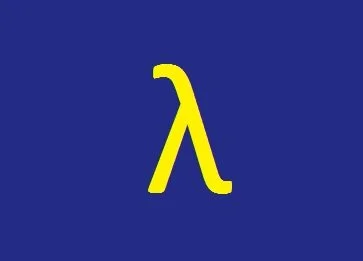
The Lambda
The lambda is a letter of the Greek alphabet that was first associated with queer liberation in 1969 when activist Tom Doerr used it as the symbol for the group Gay Activists Alliance. This was due to its use in chemistry as a symbol for a catalyst. As time went on, it became associated with gay liberation as a whole, not only the GAA. To quote Doerr, “in the struggle against oppression a cultural bond develops, suffused with human energies. The lambda now affirms the liberation of all gay people.” Although the symbol has become less prominent in recent years, it remains a symbol of the queer community.
The Triangle and Inverted Triangle
The history of the triangle as a symbol of the queer community is heavy. An inverted pink triangle was first used during the Holocaust to identify gay men, similarly to how the yellow star was used to identify Jews. In the 1970s, queer people began to wear the pink triangle as a symbol of remembrance, and eventually it become a signifier of identity as opposed to a badge of shame. During the AIDs crisis in the 1980s, the triangle, along with the slogan “SILENCE = DEATH”, served as the defining symbol of the AIDS Coalition to Unleash Power, ACT UP. It drew parallels between the explicit extermination during the Holocaust and the mass death due to HIV/AIDs. However, the triangle was flipped back right-side up. While both the upside down and right side up triangles have been used as symbols throughout queer design, they now both represent strength, community, and resilience.
The Pride Flag
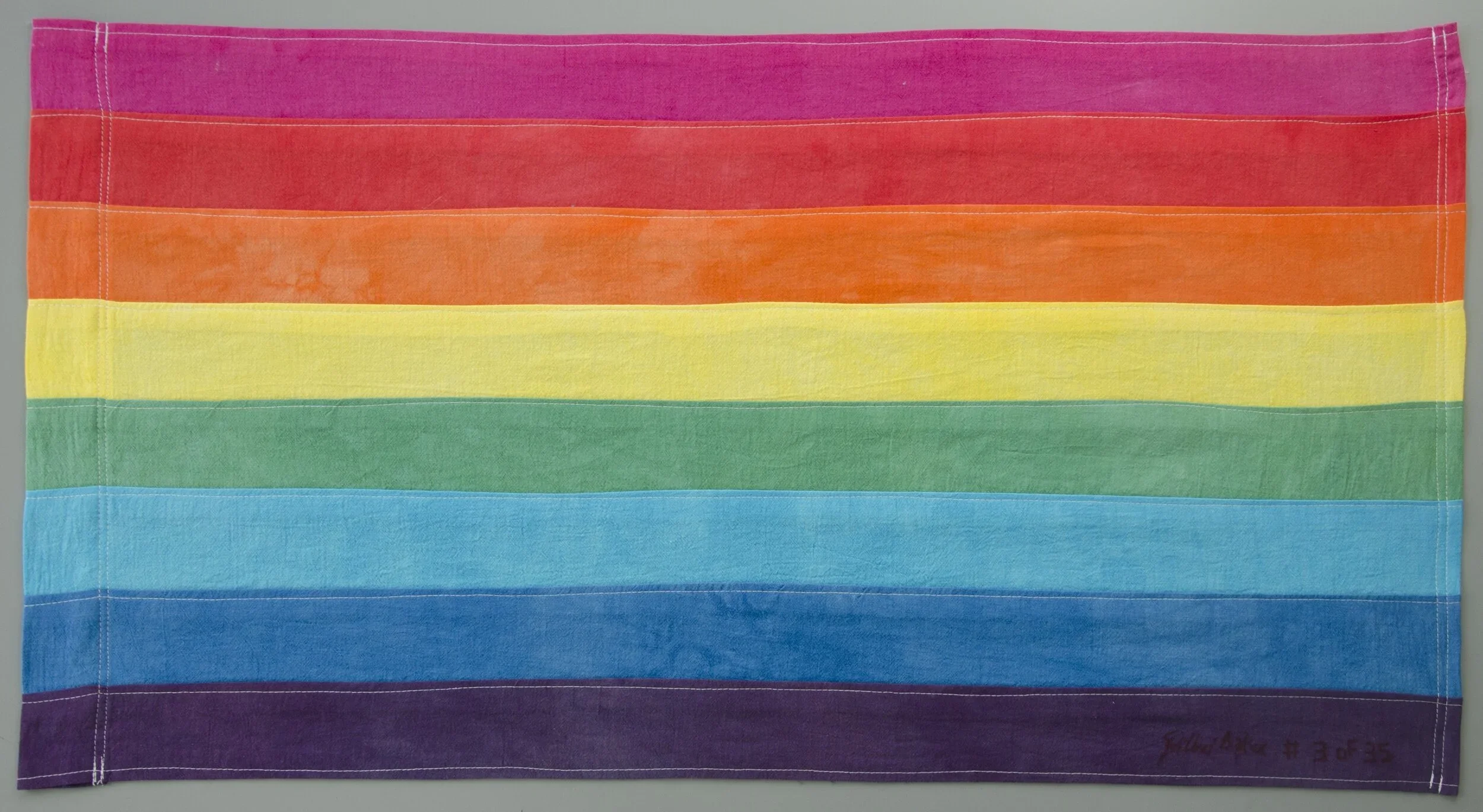
The original rainbow pride flag was designed by artist Gilbert Baker in 1978. The first flag, which was hand dyed and sewn by Baker, contained 8 stripes that represented 8 ideas - Hot Pink for Sex, Red for Life, Orange for Healing, Yellow for Sunlight, Green for Nature, Turquoise for Magic/art, Indigo for Serenity, and Violet for Spirit.
Over time, hot pink and turquoise were excised for simplicity and left us with the 6 stripe rainbow flag. Pride flags are just one example of how the community’s symbols have been created through continuous iteration, collaboration, and patchwork. Many identities that fall under the LGBTQ+ umbrella have their own differently colored striped flags that represent that group specifically. The progress flag, which contains a triangle of additional colors, was created in 2018 and builds off of Baker’s original design. Though Baker’s flag was inclusive of all, the progress flag is a way to highlight how the community still must make efforts to lift up those living with aids/hiv (black stripe) people of color (brown stripe) and trans people (the blue, pink and white stripes).
The Quilt
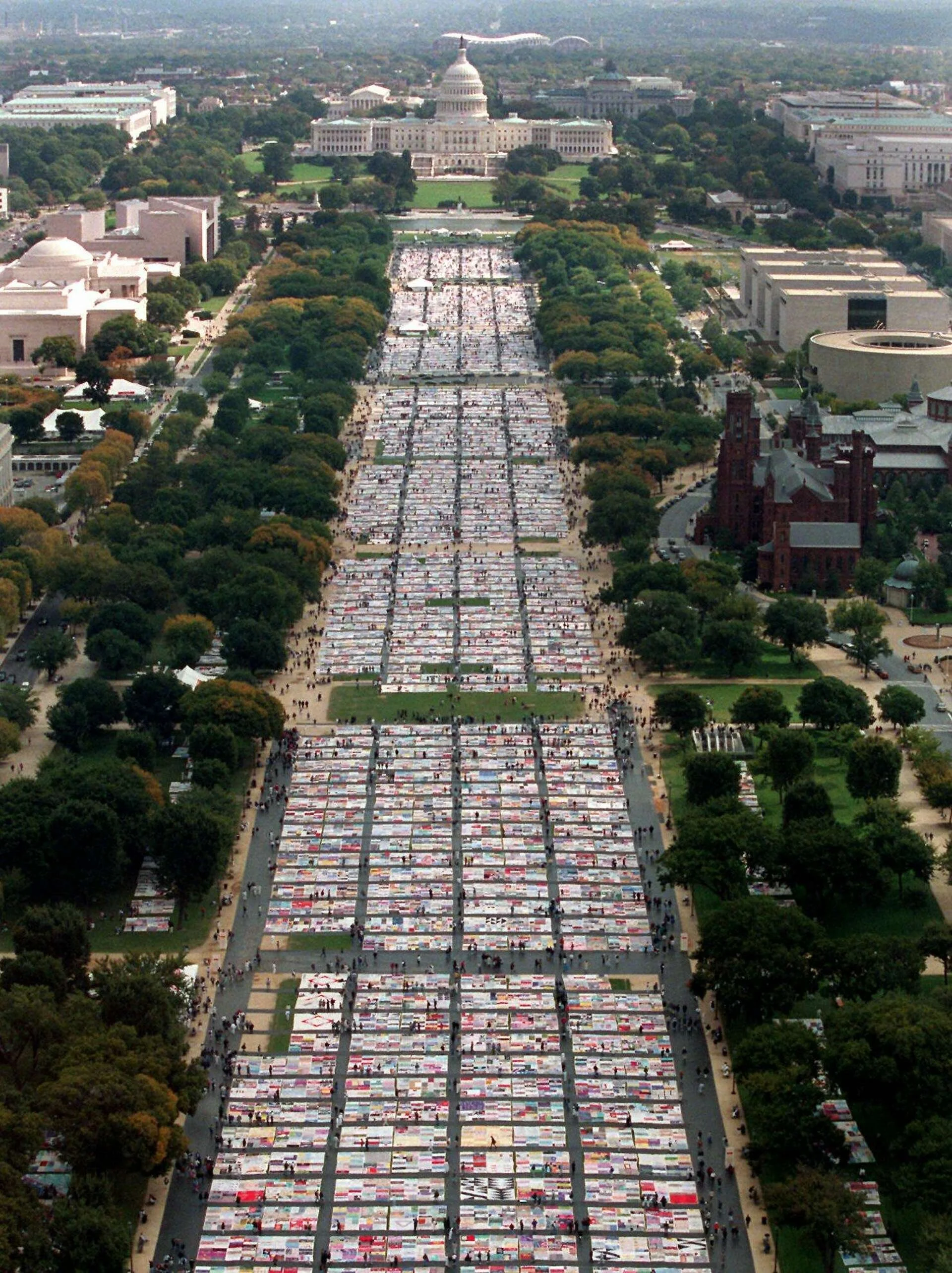
The AIDs crisis was one of the most devastating and galvanizing periods for the queer community. Victims of HIV/AIDs were frequently denied funerals, cremations, and memorials due to their identities and illness, and in reaction, activist Cleve Jones created the NAMES memorial project, commonly referred to as the AIDs quilt. These quilt blocks served as a concrete memorial for those lost to AIDs and as a physical manifestation of the scale of the tragedy. The panels each measure 3 by 6 feet, which mimics the size of a grave. Friends, family, and chosen family created blocks by hand to honor the memory of those who lost their lives, many of whom were denied medical care, understanding, and dignity. Today, the quilt weighs 54 tons and is the largest piece of folk art ever created.